Teaching and Learning at Greenvale Secondary College
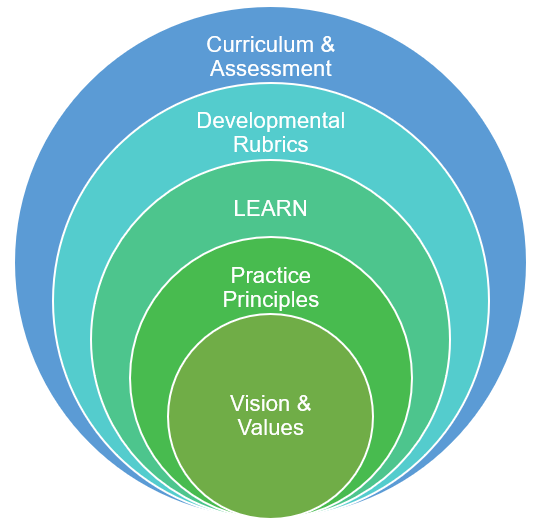
All teaching and learning at Greenvale Secondary College is informed by an Instructional Framework which is underpinned by our College Vision and Values. The focus is on providing students with a clear learning objective and strategies to measure this at the end of the lesson.
This model is also supported by the Practice Principles, LEARN Classroom Instructional Model, Developmental Rubrics and our Curriculum and Assessment Model.
At Greenvale Secondary College we recognise that being good at securing high standards in literacy and numeracy alone doesn’t guarantee high performance across a broad, rich curriculum.
As a result, we use Learner Profiles to support the development of the whole student with a belief that for a learner to be well educated they need to demonstrate knowledge, thinking skills, leadership and ethics. This ensures we can deliver on these 2 main goals for every learner:
1. To Ensure Academic Success
2. To Foster Identify Development
Pedagogy
Practice Principles
These Greenvale Secondary College Practice Principles underpin our whole school practice and inform all of the work we do in improving student learning outcomes.
Preparation and Collaboration | High Expectations for all Students | Engagement for Learning | Constructing and Applying Knowledge | Assessment, Feedback and Reflection |
|---|---|---|---|---|
When teaching and learning plans integrate the Victorian Curriculum, evidence informed instructional practices, and assessment strategies into coherent, sequential, and contextually relevant programs, they will address the learning needs of all students. | When teachers model and sustain high expectations as part of their classroom practice, demonstrating a belief that students will move beyond their current level of performance, students’ intrinsic motivation to achieve will lift and outcomes will improve. | When teachers develop quality relationships with their students and maintain a safe, supportive, and inclusive learning environment, students will be more motivated, more inclined to take intellectual risks, and collaborate with their peers. | When students are challenged to move from surface knowledge to deeper levels of understanding they will be more engaged and committed to extend, apply, and transfer their learning to new and different contexts. | When students are supported to be reflective, independent learners, who can monitor and evaluate their own learning, their self-efficacy will be enhanced, and they will experience growth in motivation, wellbeing, and achievement. |
Documented learning area programs, aligned units of study and lesson plans publicly available. | Agreed routines and learning norms developed with students and referenced and modelled throughout learning session. | Students are welcomed into the learning space and acknowledged by name. | Linking past, present, and future learning experiences to strengthen encoding and retrieval of knowledge from long term memory. | Eliciting and using evidence of student understanding to modify or enhance instruction for individuals, groups, or the whole class. |
Intentional use of learning spaces and learning walls to support and stimulate learning. | Accountability for being organised, punctual and ready to learn. | Clarity of purpose and eliciting prior knowledge spark engagement and curiosity. | Explicit instruction of key knowledge, concepts and skills. | Student self and peer assessment using criteria/rubrics to make judgements. |
Planned formats for student interaction with peers and the class. | Triangulation of student data sets and pre-assessments provide clarity around student readiness to learn. | Connections made between ideas within the discipline, across disciplines and real-world examples. | Demonstration, modelling, scaffolding and worked examples to develop understanding. | Questioning, discussion, and ongoing feedback to learners that makes thinking visible. |
Resources, equipment, and materials organised in advanced of learning sessions. | Differentiation provides a framework for learner centred instruction. | Learning voice and choice and intentional teaching of self-regulation strategies. | Open ended tasks that enable different tasks and exit points and that engage students in productive struggle. | Multiple forms of assessment to diagnose learning needs and inform learner progress and achievement. |
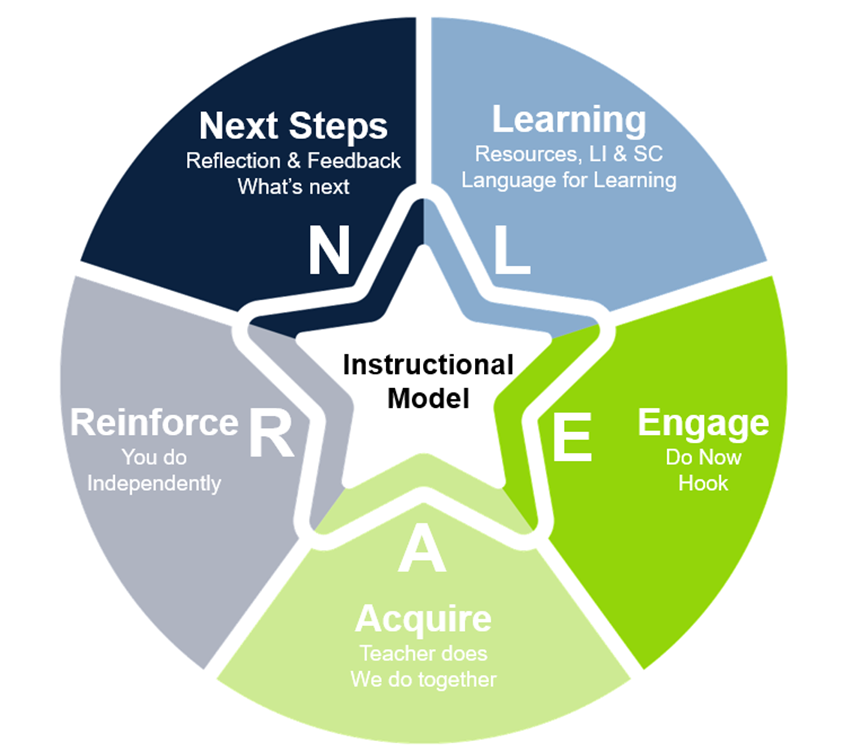
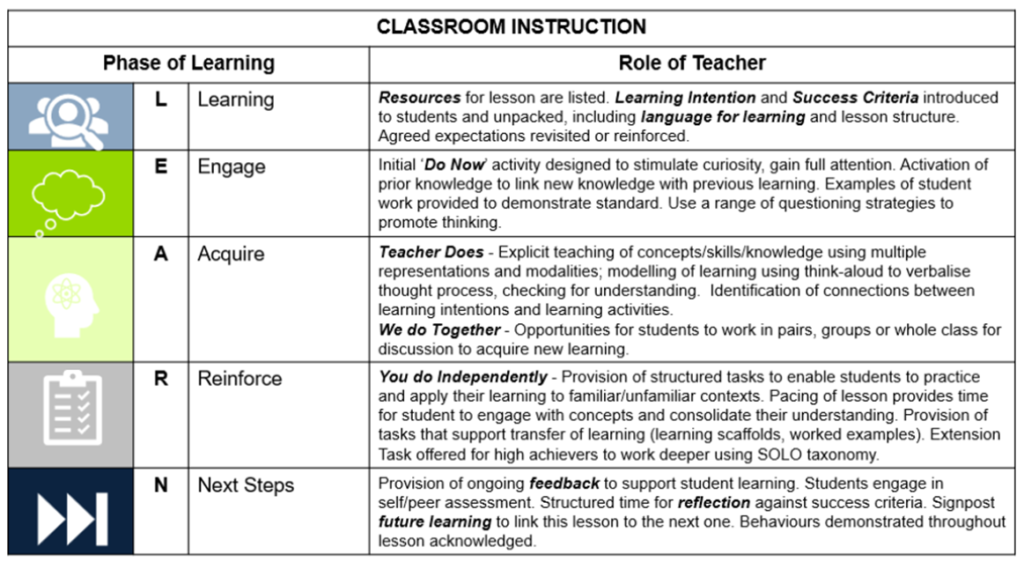
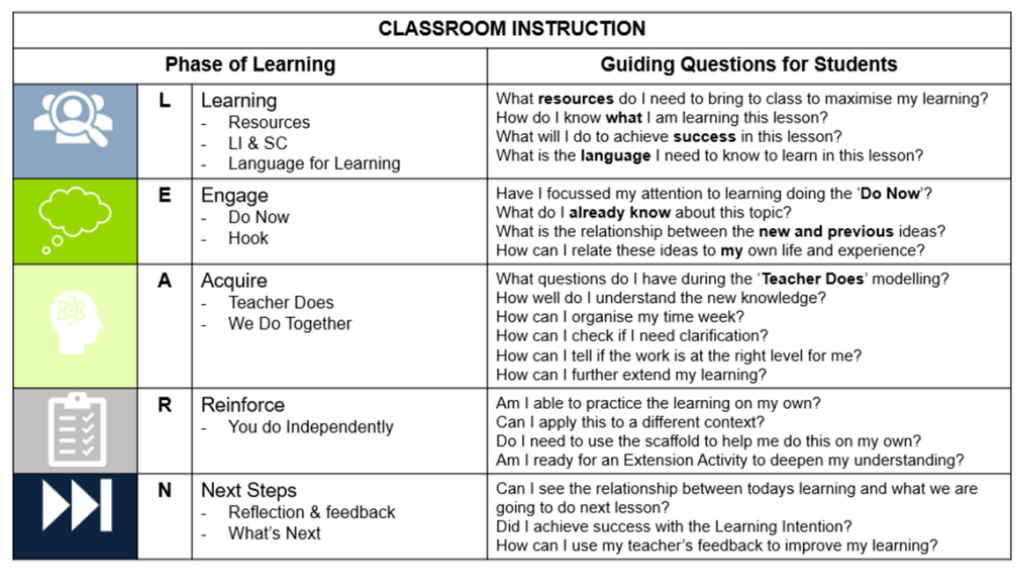
Classroom Instructional Model
The LEARN Classroom Instruction model is used to consistently structure lessons for students supporting their confidence and growth. There is a student facing model and a teacher facing model so that learning is transparent, predictable and meaningful.